

Findings and Diagnosis
A 70-year-old male patient arrived at Indimasi with chronic low back pain that had persisted for over a year. The pain extended across the gluteal region, hips, and thigh muscles, with the left side more severely affected. In addition to lower back pain, he also suffered from right knee pain, morning stiffness, disturbed sleep, acidity, and gastric discomfort after meals.
His medical history included hypertension, hypothyroidism, and an inflamed prostate. Daily movement had become increasingly difficult due to pain, stiffness, swelling, and muscular tightness.
The treatment approach focused not only on pain management but also on reducing inflammation, correcting digestive imbalance, improving sleep quality, enhancing mobility, and restoring emotional well-being through a comprehensive Ayurvedic healing program.
Day 1–2: Initial Detoxification and Pain Management
At the time of admission, the patient described his pain as severe throbbing pain with an intensity score of 7/10. The pain worsened with exertion and positional changes, significantly affecting mobility and sleep.
Clinical examination revealed:
- Tenderness and swelling over the sacroiliac joint
- Muscular tightness involving the piriformis, rhomboideus major, and rhomboideus minor muscles
- Morning stiffness lasting approximately 20 minutes
- Gastric discomfort and acidity after food intake
The initial phase of treatment focused on reducing aggravated Vata, improving digestion, and preparing the body for deeper healing therapies.
Internal medications were initiated with:
- Amapachanam (detoxification and digestion-enhancing therapy)
- Deepana (digestive and metabolic stimulation therapy)
- Vatanulomanam (therapy to regulate bowel movements and balance Vata)
The patient was also started on Shamana Snehapanam using 20 ml of Sindhuvareranda Tailam to support lubrication, pacification, and healing of the joints and muscles.
External therapies included:
- Udhwarthanam (herbal powder massage for circulation and stiffness reduction)
- Abhyangam (full-body Ayurvedic oil massage)
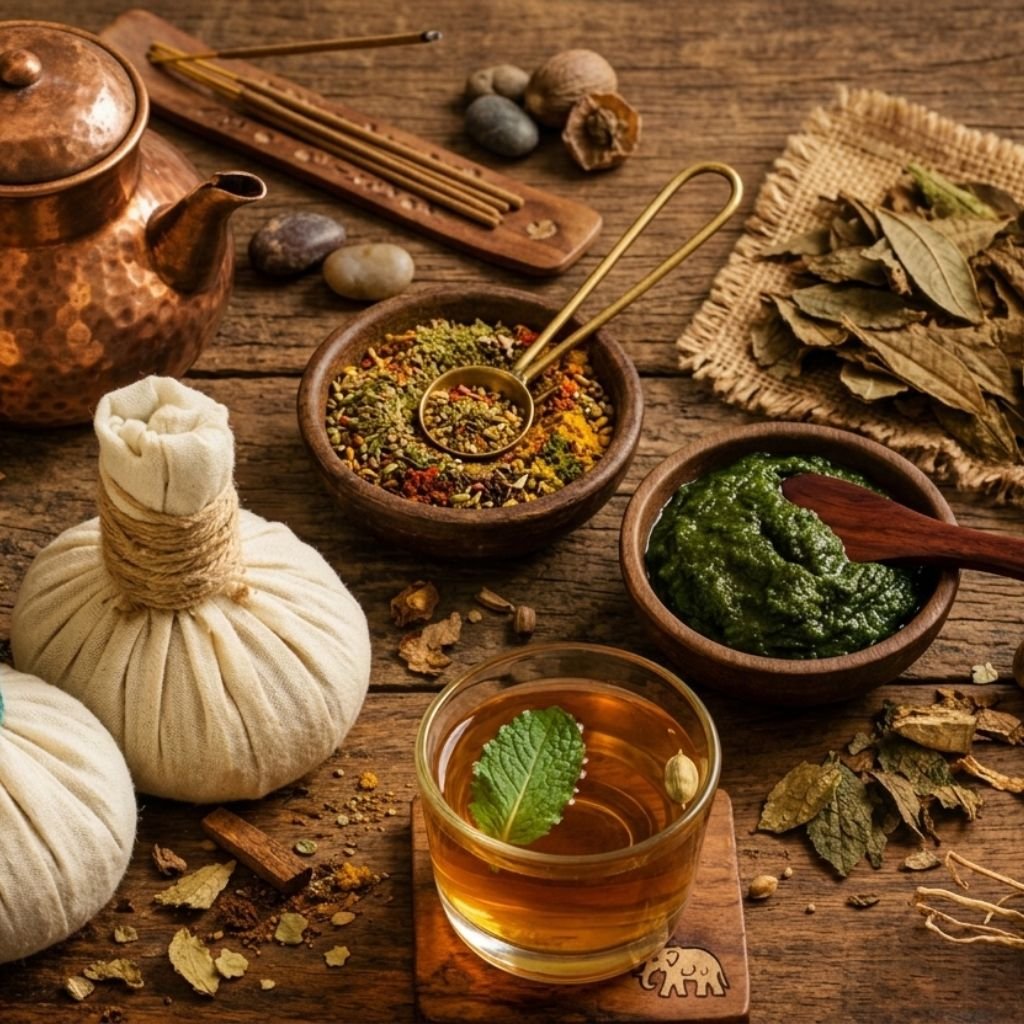
- Choorna Pinda Swedam (herbal bolus fomentation therapy)
The primary focus during these initial days was to reduce stiffness, improve circulation, and calm inflammation.
Day 3–5: Reduction in Pain Intensity and Improved Comfort
Within two days of treatment, the patient began experiencing gradual relief.
The pain intensity reduced from 7/10 to 6/10, and movement became slightly easier. Swelling around the joints and muscular tightness also started reducing gradually.
Additional therapies were introduced, including:
- Lepam (medicated herbal paste application)
- Pichu (localized oil retention therapy)
- Nasyam (nasal therapy for systemic balance and nervous system support)
By the fifth day, the pain score reduced further to 5/10. The severe throbbing pain began changing into a milder throbbing discomfort.
The patient also reported:
- Better bowel movements
- Reduced acidity and bloating
- Slight improvement in sleep quality
- Improved comfort while walking and changing positions
Daily yoga, pranayama, and meditation sessions were introduced gently to improve flexibility, breathing patterns, and circulation.
Day 6–8: Improved Mobility and Reduced Muscular Stiffness
As the therapies continued, the patient experienced noticeable physical improvement.
The pain gradually shifted from intense throbbing discomfort to a dull aching sensation. Morning stiffness reduced, and mobility improved considerably.
The combination of external therapies and internal medicines helped:
- Relax tight muscles
- Reduce inflammation around the sacroiliac joint
- Improve flexibility in the hips and lower back
- Ease pressure on the knee joints
The patient also began sleeping more comfortably as nighttime pain reduced gradually.
Mild kalari practices were incorporated carefully to support:
- Joint strengthening
- Muscle activation
- Improved posture and circulation
During this phase, the patient started feeling physically lighter and more energetic.
Day 9–11: Emotional Healing and Systemic Improvement
Chronic pain and family-related stress had significantly affected the patient’s emotional well-being before admission.
As physical symptoms reduced, emotional counselling sessions and discussions with Guruji became an important part of the healing journey.
The patient reported:
- Feeling emotionally lighter
- Reduced mental stress
- Improved emotional stability
- Better confidence in movement and recovery
Meditation and pranayama practices helped calm the nervous system and improve sleep quality further.
The patient also showed visible reduction in swelling and fluid retention throughout the body, especially in areas where pain had previously been severe.
Blood pressure readings also began improving steadily during this period.
Day 12–14: Significant Relief in Pain, Mobility, and Overall Well-Being
Toward the end of the 14-day treatment period, the patient experienced major improvement across multiple symptoms.
The pain intensity reduced significantly from 7/10 at admission to 2/10 at discharge. The remaining discomfort was described only as mild dull pain rather than severe throbbing pain.
The patient experienced:
- Improved walking ability and mobility
- Reduced muscular stiffness
- Reduced swelling and inflammation
- Better flexibility in the lower back and knee joints
- Improved digestion and reduced acidity
- Better sleep quality
- Reduced fatigue and physical discomfort
Blood pressure improved significantly from 130/90 mmHg at admission to 100/70 mmHg at discharge.
The patient also lost approximately 3 kg during the treatment period. This reduction was likely due to decreased inflammation, swelling, and fluid retention rather than intentional weight loss.
At discharge, the patient reported feeling physically stronger, mentally calmer, and emotionally more balanced.
Conclusion
This case highlights how a holistic Ayurvedic approach can support recovery in elderly patients experiencing chronic low back pain, knee stiffness, muscular inflammation, digestive imbalance, and lifestyle-related stress.
Through personalised Ayurvedic therapies, internal medicines, yoga, pranayama, meditation, mild kalari practices, and emotional counselling, the patient experienced significant improvement in pain levels, flexibility, circulation, sleep quality, digestion, emotional well-being, and overall quality of life within just 14 days.