

Patient Background
A 62-year-old man visited Indimasi Healing Village, our Ayurvedic Healing Village in Kerala, with hypothyroidism, fatigue, low energy, and lethargy that had become more pronounced over the preceding six months. He also had thyroid gland enlargement of approximately the same duration.
For around eight months, he had experienced persistent neck pain radiating into both arms, accompanied by numbness and tingling in his fingers. These symptoms gradually worsened and affected daily activities such as sitting for long periods, reading, and lifting objects. He also had a history of elevated creatinine, indicating a possible kidney-function concern that required ongoing medical monitoring.
On examination, neck movement was painful and restricted in all directions, with marked tenderness and approximately 20 minutes of morning stiffness.
Importantly, he was not admitted specifically for weight loss. The weight change described below occurred during a 14-day inpatient program planned around his hypothyroidism and associated symptoms.
Weight Change During the 14-Day Program
During his 14-day admission, his weight decreased by approximately 4 kg. This was a documented change during the program, but the available case details do not establish how much resulted from fat loss, fluid changes, dietary changes, or other factors.
Hypothyroidism can contribute to fatigue and make weight management more challenging for some people. However, this individual result should not be interpreted as evidence that Ayurvedic therapies treat hypothyroidism or reliably produce the same weight change in others.
The Integrative Ayurvedic Treatment Plan
Our approach to Ayurvedic treatment for Hypothyroidism combined traditional Panchakarma procedures, external therapies, dietary guidance, physical activity, meditation, and internal Ayurvedic formulations. Several elements were used together rather than relying on one therapy alone.
Internal Therapies and Panchakarma
The program began with Amapachanam and Deepana, traditional Ayurvedic approaches intended to address Ama and support digestive fire, alongside Vatanulomanam to help regularize bowel movements.
Next, Snehapanam involved taking medicated ghee internally, with the dose progressively increased to prepare for Virechanam, the therapeutic purgation procedure performed around the midpoint of his stay.
During the second half of the program, he received Vasti in two forms on alternating days:
- Sneha Vasti: Oil-based medicated enema therapy.
- Kashaya Vasti: Herbal decoction-based enema therapy.
Virechanam and Vasti were the two core Panchakarma procedures during his admission.
External Therapies for Neck Pain and Stiffness
External therapies changed as the program progressed.
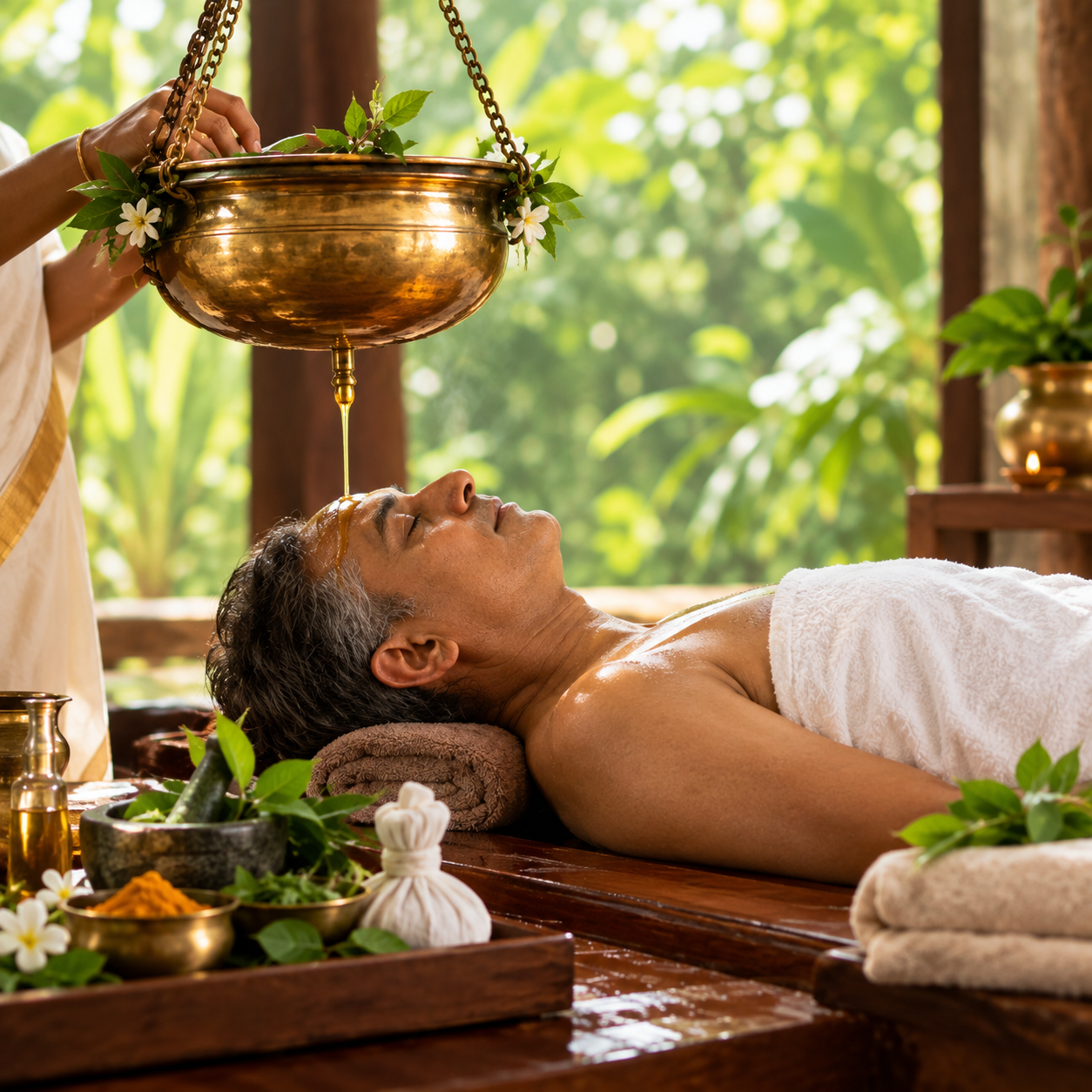
In the earlier phase, he received Udwarthanam and Utsadanam, herbal powder-based massage therapies, along with Dhanyamla Dhara, involving a warm medicated liquid poured over the body, and Lepam, a herbal paste application.
Later, the treatment plan shifted to Abhyangam (medicated oil massage) combined with Choorna Pinda Swedam and Jambeera Pinda Swedam (herbal poultice therapies). Pichu, a localized medicated oil application, was also included. Steam sessions continued throughout the program, and Shashtika Pinda Swedam, a nourishing medicated rice poultice treatment, was introduced toward the end.
These therapies formed part of the traditional care plan for his neck pain and stiffness. Their individual effects cannot be established from the case details alone.
Diet, Movement, and Internal Support
Alongside the therapies, he followed an Ayurvedic diet designed to support weight management. His daily routine included Kalari practice, 60 minutes of yoga, and 30 minutes of meditation with Guru Yogi Shivan.
He also received internal Ayurvedic formulations intended to support thyroid-related concerns, kidney health, digestion, and general detoxification. Because he had elevated creatinine, ongoing medical monitoring of kidney function remained important.
Guru Yogi Shivan’s Guidance
During the program, Guru Yogi Shivan emphasized mindful eating, appropriate physical activity, regular breathing practices, and meditation. He explained that greater awareness of the mind may help a person recognize cravings and eating habits that influence weight-related behaviour.
He also taught the patient Archana Pranayama, which was presented as a breathing practice intended to support glandular functions, particularly the thyroid, and promote overall well-being. This describes the intention behind the practice; the available records do not establish that it improved thyroid function or changed hormone levels.
Documented Outcomes at Discharge
The case notes recorded the following changes over the 14-day admission:
- Weight: Decreased by approximately 4 kg.
- Neck pain and stiffness: Markedly improved.
- Finger numbness and tingling: Markedly improved.
- Fatigue and energy levels: Markedly improved.
- Digestion: Regular bowel movements, good appetite, no gas, and no acidity.
- Sleep: Sound by discharge.
According to the patient’s account and the care team’s observations, his presenting symptoms—including neck pain, stiffness, finger numbness and tingling, and fatigue—showed marked improvement during the program.
However, the supplied case details do not report follow-up thyroid hormone results, changes in thyroid gland size, or updated creatinine and kidney-function measurements. Therefore, we cannot conclude that his thyroid function normalized, his kidney function improved, or the underlying hypothyroidism was corrected.
Why We Used an Integrated Approach
The program brought together several components: a Panchakarma protocol centered on Virechanam and Vasti, a weight-management-supportive diet, daily Kalari and yoga, meditation, and other traditional therapies. The external treatment plan also changed over time, with different massage techniques, poultices, localized oil applications, and steam sessions included during different phases.
This combination provides context for understanding the care he received, but it does not establish which component contributed to each outcome. The approximately 4 kg weight change could have reflected several factors, including dietary intake and changes in body fluid, and the available records do not establish the precise cause.
For people considering Ayurvedic treatment for Hypothyroidism, it is important to distinguish supportive traditional care from treatment that has been shown to correct thyroid dysfunction. Hypothyroidism requires appropriate medical monitoring, including thyroid-function testing and prescribed treatment when indicated.
What This Case May Mean for You
If you are living with hypothyroidism, fatigue, or difficulty managing your weight, an individualized plan should consider your thyroid status, symptoms, diet, activity level, medications, and other health conditions.
At our wellness centre, we focus on understanding each guest’s concerns and discussing care options according to their individual needs. Our approach to Personalized Wellness may include traditional Ayurvedic therapies and lifestyle practices, but these should not replace evidence-based thyroid care.
For anyone exploring Authentic Healing in Kerala, it is important to discuss potential benefits, limitations, and safety with qualified healthcare professionals—particularly if you have kidney concerns or other ongoing medical conditions. A 14-day change in one person’s weight cannot predict another person’s results.
About Our Personalized Ayurvedic Approach
At Indimasi Healing Village, our approach combines traditional Ayurvedic care with individualized treatment planning and supportive daily practices. As an Ayurvedic Healing Village, we encourage guests to discuss their health history, existing medications, and medical monitoring needs with qualified practitioners before beginning an intensive program.
If you are considering Ayurvedic treatment for Hypothyroidism, speak with our medical team about your symptoms, treatment goals, and how traditional therapies may fit alongside appropriate medical management.
Any claim that our facility is NABH-Certified should be included only after verifying its current accreditation status and exact scope. This avoids presenting an unverified credential as fact.
Medical Disclaimer
This case describes one patient’s experience during a supervised 14-day Ayurvedic Panchakarma program at Indimasi Healing Village. The admission was undertaken for hypothyroidism and associated symptoms, not specifically for weight loss. The reported weight change and symptom improvements do not guarantee similar outcomes for others.
This account is not a substitute for medical advice, diagnosis, or treatment. Ayurvedic therapies should not replace prescribed thyroid medication or appropriate monitoring of thyroid and kidney function. A history of elevated creatinine requires particular care and medical supervision.
Would you like to discuss an individualized care plan based on your health concerns?
CTA: Enquire with our medical team →