

Joint pain, morning stiffness, lower back discomfort, and pain radiating down the leg can make everyday activities difficult. When several symptoms occur together, understanding the different concerns and planning an individualized care approach becomes important. At Indimasi, our approach combines traditional Ayurvedic care, personalized therapies, dietary guidance, Yoga, meditation, and lifestyle support according to each guest’s needs.
This case study describes the experience of a 55-year-old woman who attended our healing village in Kerala with multi-joint pain and stiffness, along with lower back pain radiating down her right leg. During her 14-day inpatient program, she received an individualized Panchakarma-based treatment plan under professional supervision. By discharge, improvements in pain, stiffness, digestion, and sleep were documented.
Her experience offers an example of how an integrated Ayurvedic program may be structured for someone experiencing multiple musculoskeletal and digestive concerns. Individual responses vary, and this single case does not establish that the treatment caused the reported improvements or that the same results can be expected for everyone.
Understanding the Patient’s Symptoms Before Treatment
The patient was 55 years old and sought care for persistent discomfort affecting multiple joints. Her symptoms included joint pain, stiffness, morning stiffness, swelling, and tenderness. She also experienced lower back pain that radiated down her right leg, making movement and daily activities more difficult.
Alongside these musculoskeletal concerns, she reported digestive discomfort, including abdominal bloating, acidity, and frequent bowel movements. She also experienced fatigue, tiredness, a low mood in the mornings associated with pain and stiffness, and disturbed sleep. Her appetite was reported to be good.
These symptoms affected more than one aspect of her daily well-being. Joint stiffness and back discomfort created physical challenges, while digestive symptoms and interrupted sleep added to her overall discomfort.
A suitable care plan therefore needed to consider the combination of symptoms rather than focus on one complaint alone. Our approach at Indimasi considered her musculoskeletal presentation, digestive concerns, sleep, daily routine, and general well-being when planning the program.
Clinical Assessment and Diagnoses
The patient underwent a clinical assessment before her treatment plan was implemented. The recorded findings included:
- Tenderness around the cervical spine and lumbar spine.
- Swelling in the lower back region.
- A positive right straight-leg-raise test at 40 degrees.
- Tenderness in both knees.
- Pain and stiffness affecting multiple joints.
- Lower back pain radiating down the right leg.
At discharge, the documented diagnoses included multi-joint pain and stiffness consistent with age-related degenerative changes, described in Ayurveda as Sandhigata Vata, with symptoms reported for approximately two months. She also had radiating sciatic pain, described in Ayurveda as Ghridhrasi, with symptoms reported for approximately four months.
Sandhigata Vata and Ghridhrasi are Ayurvedic diagnostic terms. Sandhigata Vata is associated with joint-related pain and stiffness, while Ghridhrasi is associated with pain that radiates along the leg. These traditional descriptions should not be treated as direct substitutes for biomedical diagnoses.
A positive straight-leg-raise test can be relevant when assessing radiating leg pain, but the test alone does not establish its underlying cause. Appropriate clinical assessment remains important, particularly when symptoms involve persistent back pain, leg pain, weakness, or changes in sensation.
The 14-Day Ayurvedic Panchakarma Program at Indimasi
At Indimasi, our approach to Ayurvedic treatment for Joint pain is based on individual assessment and a treatment plan suited to the person’s documented concerns. For this patient, the 14-day inpatient program combined traditional Ayurvedic procedures, internal medicines, dietary considerations, Yoga, meditation, and lifestyle guidance.
The treatment sequence included preparatory digestive support, Snehapanam, Virechanam, and a range of external therapies. Each component was selected as part of the overall plan under professional supervision.
1. Preparatory Ayurvedic Care
The initial stage included:
- Amapachanam: A traditional Ayurvedic approach used in the context of Ama-related concepts.
- Deepana: Preparatory care described in Ayurveda as supporting digestive function.
- Vatanulomanam: A traditional approach intended to support the regulation of Vata according to Ayurvedic principles.
These procedures formed the preparatory stage of the patient’s program. Within the Ayurvedic framework, digestion and the assessment of Ama may influence treatment planning. These concepts belong to traditional Ayurvedic practice and should not be presented as medically proven explanations for degenerative joint changes or sciatic pain.
2. Snehapanam for Five Days
The patient received Snehapanam over five days, with the dose increased progressively according to the planned treatment protocol.
Snehapanam is a traditional Ayurvedic procedure involving the supervised administration of internal oleation. Its use, preparation, dosage, and suitability depend on the individual and the practitioner’s assessment.
In this case, Snehapanam formed part of the preparatory sequence before the subsequent Virechanam procedure.
3. Virechanam During the Treatment Program
Virechanam was performed around the midpoint of the program. It is a traditional Ayurvedic cleansing procedure used within specific Panchakarma protocols.
Its place in this patient’s care plan followed the preparatory stage and Snehapanam. The procedure was part of the overall treatment sequence rather than an isolated intervention.
Panchakarma procedures require appropriate assessment, preparation, supervision, and consideration of possible risks. They should not be attempted independently or assumed to be suitable for every person with joint or back pain.
4. External Ayurvedic Therapies
The patient also received a combination of external therapies during her stay. These included:
- Utsadanam
- Eye-wash therapy
- Choorna Pinda Swedam
- Lepam
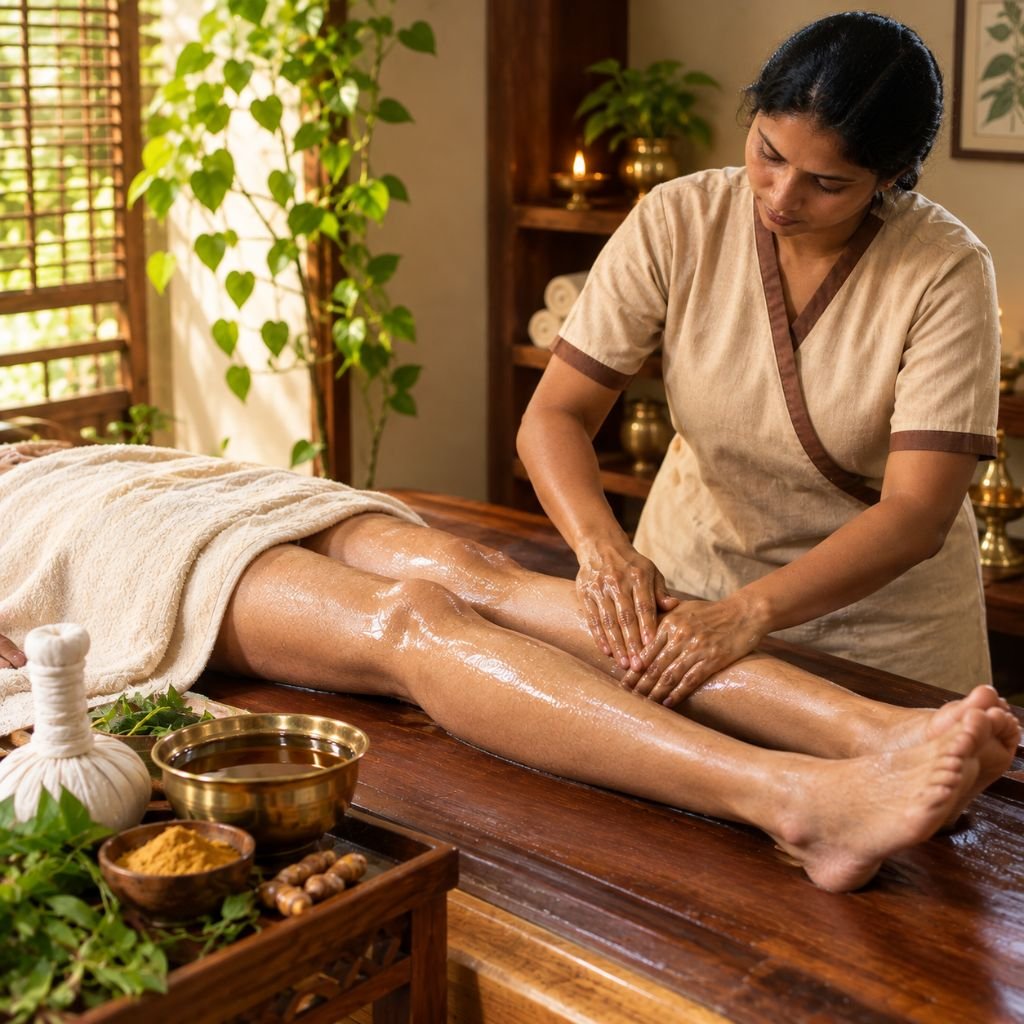
- Abhyangam
- Dhanyamla Dhara
- Thalam
- Upanaham
- Jambeera Pinda Swedam
- Mild steam therapy
These therapies formed part of the individualized program for her reported joint discomfort, stiffness, lower back symptoms, and overall care needs.
Abhyangam involves traditional oil-based massage, while Upanaham is a traditional localized application used in Ayurvedic practice. Choorna Pinda Swedam and Jambeera Pinda Swedam involve specific forms of therapeutic fomentation. The exact procedures and their suitability can vary according to the treatment plan.
Although these therapies were included in the patient’s program, the case does not establish which individual procedure contributed to the improvements documented at discharge. Their use should be understood within the context of the complete, supervised care plan.
5. Internal Ayurvedic Medicines
Internal Ayurvedic medicines were included as part of the treatment plan. They were selected with the intention of addressing the patient’s joint-related complaints and digestive concerns within the Ayurvedic framework.
The medicines formed one component of the broader program, alongside the external therapies, preparatory procedures, and daily wellness activities.
Specific medicine names and dosages have not been included here because they were not provided in the case details. These should only be added if they can be confirmed from the patient’s clinical records and are appropriate to publish.
Yoga, Meditation, and Guidance from Guru Yogi Shivan
The program extended beyond treatment procedures. The patient participated in daily Yoga for approximately 60 minutes and meditation for approximately 30 minutes, with guidance from Guru Yogi Shivan.
The wellness sessions were included to support awareness of movement, breathing, relaxation, and daily habits. Activities should be adapted to an individual’s mobility, symptoms, and physical capacity, particularly when joint pain and radiating leg pain are present.
Guruji’s guidance also covered nutrition, regular physical activity, breathing practices, meditation, and stress management. Particular attention was given to maintaining regular physical activity, especially after menopause, while being mindful of the person’s condition and limitations.
The guidance encouraged the patient to develop greater awareness of her body and mind and to consider how daily routines may support general well-being. These practices complemented the treatment program but should not be interpreted as a replacement for medical assessment or appropriate rehabilitation.
What Improved by the End of the 14-Day Program?
At discharge, the case notes recorded improvements in several of the patient’s reported concerns.
Joint pain and stiffness
The patient reported that pain and stiffness had improved by discharge.
Digestive comfort
Bowel movements were reported to be regular, with good appetite and no reported gas or acidity at discharge.
Sleep
The patient’s discharge notes described her sleep as sound.
These observations describe the reported changes during the inpatient stay. The available case details do not establish that the improvements persisted after discharge, and they do not identify the contribution of any one therapy.
Although fatigue, tiredness, and low morning mood were reported before treatment, the supplied outcome details do not confirm whether these symptoms improved. They should therefore not be presented as resolved.
Blood Pressure Recorded During the Stay
The recorded blood pressure was 110/68 mmHg at admission and 90/70 mmHg at discharge. Because the systolic reading was lower at discharge, these figures should be checked against the original clinical record and interpreted by a qualified clinician before publication. They should not be presented as evidence of improvement.
Why We Used This Integrated Approach
This case involved more than one concern: multi-joint pain and stiffness, radiating leg pain, digestive discomfort, and disturbed sleep. The treatment plan brought together several traditional Ayurvedic procedures with Yoga, meditation, and lifestyle guidance.
Within the Ayurvedic framework, the preparatory stage addressed digestive-related considerations before Snehapanam and Virechanam. The external therapies were then included as part of the broader plan for the patient’s musculoskeletal complaints.
From a practical care perspective, the case highlights the importance of documenting the person’s symptoms, assessment findings, treatment sequence, and outcomes separately. It also shows why the results of a multi-component program should be reported cautiously: the observed changes cannot be attributed to one procedure without further evidence.
For someone considering Ayurvedic treatment for Joint pain, an individualized assessment is important. Joint discomfort can have different causes, and radiating pain from the lower back may require a separate clinical evaluation. A treatment approach should reflect the person’s symptoms, medical history, mobility, and other health considerations.
What This Case May Mean for People Experiencing Joint Pain and Sciatica
Persistent joint pain and radiating leg pain can affect movement, sleep, and daily routines. However, similar symptoms do not always have the same underlying cause.
Joint pain may be associated with age-related changes, inflammatory conditions, previous injuries, or other health concerns. Pain travelling from the lower back down the leg may have several possible explanations and should be assessed appropriately.
This case demonstrates how Indimasi structured a supervised 14-day Ayurvedic program for one woman with overlapping musculoskeletal and digestive complaints. Improvements in pain, stiffness, digestive comfort, and sleep were documented by discharge.
It does not prove that the program treats every cause of joint pain or sciatica, nor does it establish a cure. Anyone experiencing persistent or worsening symptoms should seek appropriate medical evaluation. New bladder or bowel-control problems, numbness around the groin or saddle area, or progressive leg weakness require urgent medical attention.
Continuing Care After Discharge
The inpatient program lasted 14 days and was followed by 30 days of prescribed post-discharge medicines and dietary guidance, with follow-up recommended.
Continuity of care matters because changes observed during a residential program do not necessarily indicate long-term improvement. Follow-up can help assess how symptoms develop after returning to everyday routines and whether the care plan needs to be reviewed.
Any medicines, dietary recommendations, or activity guidance should be followed according to the treating practitioner’s instructions. Ongoing or worsening pain should be reassessed rather than managed solely through the continuation of traditional therapies.
At Indimasi, our intention is to provide individualized care and guidance that takes account of the guest’s symptoms, daily habits, and overall well-being. As a retreat centre and wellness centre in Kerala, we combine traditional practices with a structured care environment while recognizing the importance of appropriate medical assessment.
Why Consider Indimasi for an Individualized Ayurvedic Program?
Indimasi is a healing village in Kerala that offers a setting for guests seeking traditional Ayurvedic care, structured wellness activities, and lifestyle guidance.
Our approach brings together individualized treatment planning, traditional Ayurvedic procedures, Yoga, meditation, and guidance on nutrition and daily habits. The therapies included in a program depend on an individual’s assessment and suitability, rather than a fixed package being appropriate for everyone.
For people exploring an ayurvedic treatment centre, it is important to ask about the assessment process, treatment supervision, expected duration, possible risks, follow-up, and coordination with other healthcare professionals when needed.
This case study illustrates one patient’s 14-day experience at Indimasi. It is not a guarantee of similar results for other guests. Our focus is on understanding individual needs, documenting progress responsibly, and providing guidance suited to the person’s circumstances.
Important Medical Disclaimer
This article describes an individual case involving a supervised 14-day Ayurvedic Panchakarma-based program, followed by 30 days of post-discharge medicines and dietary guidance. The reported outcomes reflect the information documented during the patient’s stay. They do not establish causation, long-term effectiveness, or a guaranteed result.
Ayurvedic diagnostic concepts are presented within their traditional framework and should not be treated as direct substitutes for biomedical diagnoses. This case study is for informational purposes and does not replace professional medical advice, diagnosis, or treatment. Anyone with persistent joint pain, radiating leg pain, or worsening symptoms should seek appropriate clinical evaluation.