

Patient Background
A 59-year-old woman from Russia came to Indimasi Healing Village, our Ayurvedic Healing Village in Kerala, with neck pain and stiffness, along with hip and knee joint pain that affected her daily activities and overall quality of life. She also experienced disturbed sleep, recurrent headaches, particularly during weather changes, and digestive symptoms, including acidity, bloating, and nausea. These concerns had been persistent and affected her daily comfort.
On examination, her chest was clear, with no icterus, clubbing, or cyanosis, and her vital signs were stable.
Diagnosis: Sandhigata Vata (Osteoarthritis)
At discharge, her diagnosis was Sandhigata Vata, the classical Ayurvedic term closely associated with osteoarthritis. In Ayurvedic understanding, Vata vitiation affecting the Sandhi (joints) is associated with dryness, reduced lubrication, pain, and progressive stiffness. The condition is traditionally described as age-related and degenerative, which aligned with her gradual joint symptoms. This differs from the pattern traditionally described as Vata Rakta, which involves blood and tissue in Ayurvedic classification.
The Ayurvedic Perspective
We approached her symptoms as connected concerns rather than treating each complaint separately. Her neck, hip, and knee pain and stiffness were understood through the Ayurvedic concept of Vata affecting the joints and supporting tissues, consistent with Sandhigata Vata.
Her weather-sensitive headaches and disturbed sleep were considered part of a broader pattern of Vata aggravation. Her acidity, bloating, and nausea were assessed through the concepts of Agni Mandya (weakened digestive fire) and Ama accumulation. In Ayurvedic understanding, these digestive concerns may be considered alongside joint symptoms when planning care. This traditional interpretation guided our treatment approach but should not be taken as a confirmed biomedical explanation for her symptoms or joint inflammation.
Line of Treatment at Our Ayurvedic Healing Village
Our approach to Osteoarthritis treatment in Ayurveda combined internal medicines, Panchakarma procedures, external therapies, dietary guidance, and daily lifestyle practices. The treatment sequence was planned according to the Ayurvedic assessment of her condition.
Internal Medicines and Panchakarma
Treatment began with Deepana to support digestive fire, followed by Amapachanam, involving internal medicines intended to digest and clear Ama. Vatanulomanam was also used to help regularize bowel movements and support healthy Vata function. These steps formed the foundation before deeper purification procedures.
Next, Snehapanam involved taking medicated ghee internally. The dosage was gradually increased from 20 g to 110 g to prepare her system for Virechanam, the therapeutic purgation procedure that served as the centerpiece of her Panchakarma protocol.
External Therapies
The external treatment initially included:
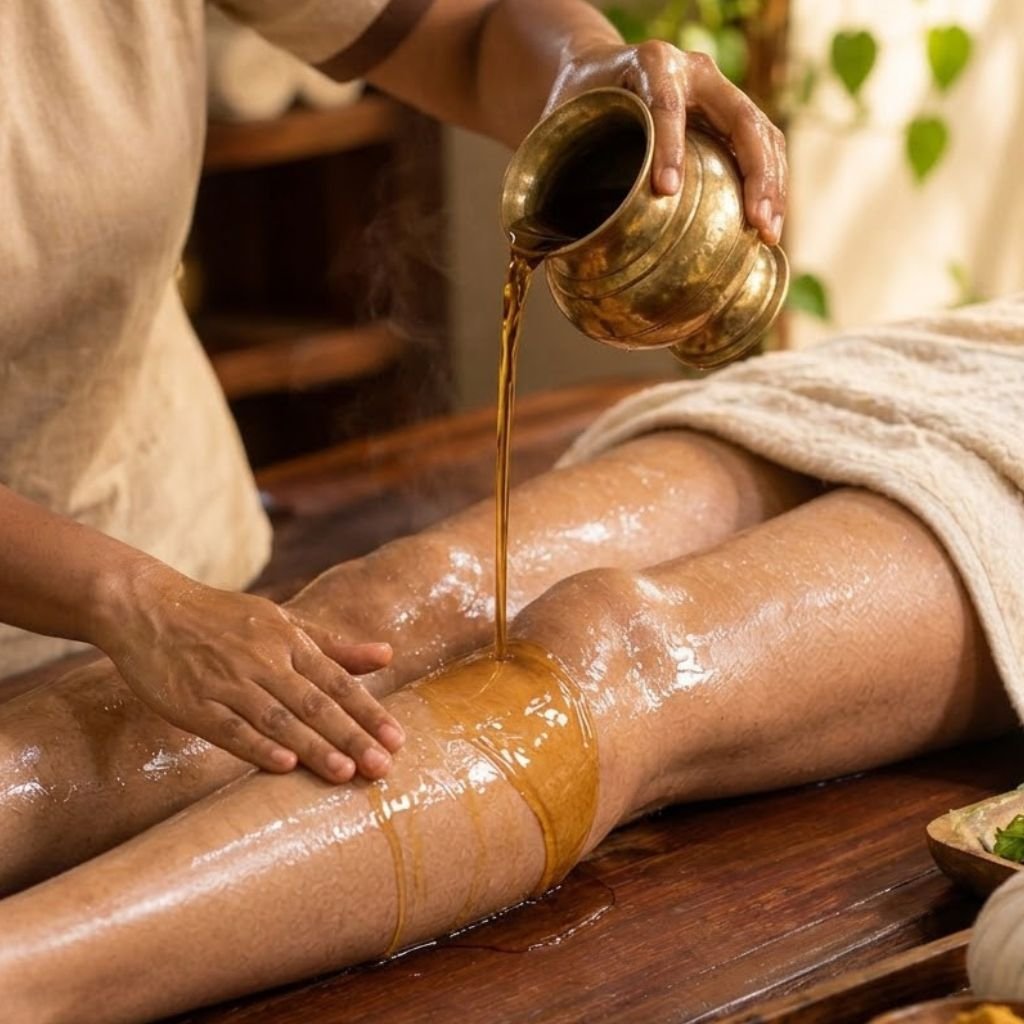
- Abhyangam: Medicated oil massage.
- Kashaya Dhara: Warm herbal decoction poured over the body.
- Choorna Pinda Swedam: A local herbal poultice treatment used for targeted joint care.
Partway through the program, Abhyangam was replaced with Utsadanam, a herbal powder-based massage traditionally used to address Kapha and support circulation. Kashaya Dhara and Choorna Pinda Swedam continued during this change. In the later phase, Lepam, an herbal paste application, was added to address her joint pain and stiffness.
Daily Routine and Supportive Practices
Diet, internal medicines, external therapies, yoga, Kalari, and pranayama were incorporated throughout the program. A consistent daily sleep-wake schedule was also encouraged.
In Ayurvedic practice, irregular daily routines are associated with Vata aggravation. This was relevant to the treatment rationale because the patient had weather-sensitive headaches, disturbed sleep, and joint stiffness. The routine was therefore included as part of the overall care plan rather than treated as a separate recommendation.
Guru Yogi Shivan’s Intervention
During her stay, Guru Yogi Shivan introduced a simple, structured breathing practice with particular emphasis on Kumbhakam (breath retention). He explained the practice as a way to gently increase internal warmth and support the body’s natural processes.
In this case, the practice was introduced with the aim of reducing joint swelling and discomfort and supporting greater ease of movement. However, the available case notes do not document a measured outcome specifically attributable to this breathing practice.
Patient Outcomes at Discharge
The documented improvements at discharge were:
- Digestion: Bowel movements were regular, appetite was good, gas was absent, and acidity had improved.
- Sleep: Her sleep had improved compared with the disturbed sleep reported at the beginning of the program.
The available notes do not state whether her neck, hip, and knee pain or stiffness, or her recurrent headaches, improved by discharge. These outcomes should be confirmed from the original clinical records before publication because they were among her main presenting concerns. We do not claim improvements that are not documented.
Why We Used This Integrated Approach
The treatment sequence followed the Ayurvedic rationale of addressing digestive concerns and regularizing bowel movements before proceeding with Snehapanam and Virechanam. This was intended to prepare the patient for the purification procedures within the planned Panchakarma approach.
The external therapies were adjusted as the program progressed. Abhyangam and Kashaya Dhara were used initially, with Choorna Pinda Swedam added for targeted joint care. Abhyangam was later replaced with Utsadanam while Kashaya Dhara and Choorna Pinda Swedam continued, and Lepam was added during the later phase. This reflects how the treatment plan was adapted rather than following one unchanged set of external therapies throughout.
Diet, yoga, Kalari, pranayama, and a regular sleep-wake schedule were also maintained as parts of the overall approach. We considered these daily practices relevant to the Ayurvedic management of Vata-related concerns, including weather-sensitive joint stiffness and headaches. These details explain the reasoning behind the care plan; they do not establish that a particular therapy or routine caused the reported improvements.
What This Case May Mean for You
If joint pain and stiffness occur alongside weather-sensitive symptoms, disturbed sleep, or digestive concerns, discussing these symptoms together with a qualified healthcare professional may help provide a fuller assessment. Osteoarthritis treatment in Ayurveda may include individualized traditional therapies, dietary guidance, and lifestyle practices, depending on the person’s health history and clinical needs.
This case also highlights the role that Ayurveda assigns to regular daily routines, particularly consistent sleep and wake times, in its approach to Vata-related symptoms. However, the available records do not confirm whether the patient’s joint symptoms or headaches improved. As with any individual case, results vary, and one person’s experience cannot predict another person’s outcome.
At our wellness centre in Kerala, we focus on understanding each guest’s concerns and planning care around their individual assessment. For those exploring Authentic Healing in Kerala, India, it is important to discuss the proposed therapies, their potential benefits and limitations, and their safety with qualified practitioners. Ayurvedic care should complement—not replace—appropriate medical assessment and evidence-based osteoarthritis management.
About Our Approach to Personalized Wellness
At Indimasi Healing Village, our approach combines individualized assessment with traditional Ayurvedic care and supportive daily practices. We aim to understand each guest’s concerns before planning therapies, rather than assuming the same program is suitable for everyone. Our approach to Personalized Wellness should always be discussed with qualified practitioners in light of individual health needs, available evidence, and treatment limitations.
If you are considering Osteoarthritis treatment in Ayurveda, speak with our medical team about your symptoms, medical history, treatment options, and how traditional care may fit alongside appropriate medical management.
Any reference to NABH-Certified status should be included as a confirmed credential only after verifying the facility’s current accreditation and its exact scope.
Medical Disclaimer
This case describes one patient’s individual experience during a supervised Ayurvedic program at Indimasi Healing Village. It does not guarantee similar results for other individuals and is not a substitute for medical advice, diagnosis, or treatment. Osteoarthritis and persistent joint pain should be assessed by a qualified healthcare professional.
Would you like to discuss an individualized care plan for joint pain and stiffness?
CTA: Enquire with our medical team →