

Background
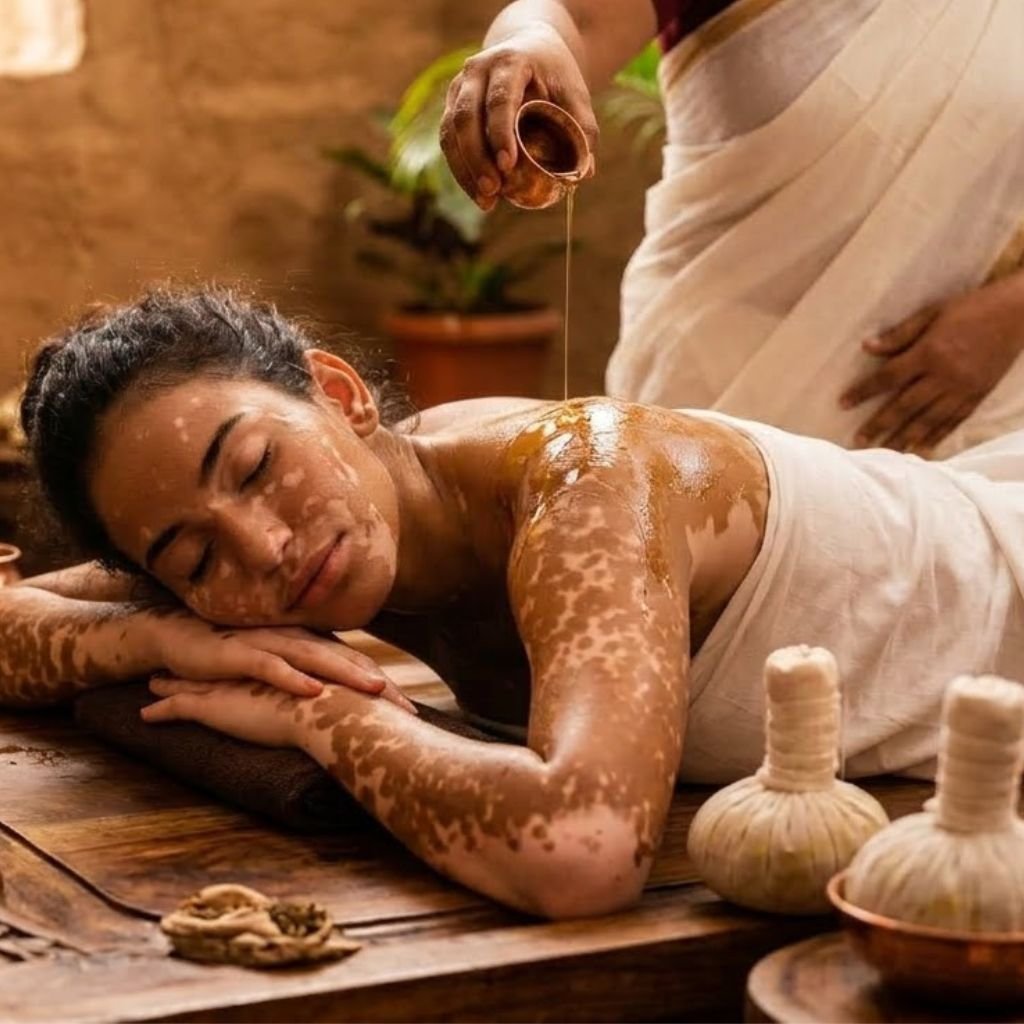
A 25-year-old woman came to Indimasi with vitiligo (Swithram) that had been progressing for a year and a half. Her white patches first appeared during a period of significant occupational and personal stress and had been spreading gradually since. Before reaching us, she had been treated with corticosteroids by conventional dermatologists, a common first-line approach, but the steroids made things markedly worse. Her patches spread rapidly and visibly in the weeks after starting the medication, which is a well-documented risk with immunosuppressive treatment for vitiligo: suppressing immune activity can, in some patients, accelerate rather than halt depigmentation.
Seeking a more comprehensive approach for vitiligo treatment in Kerala, she came to Indimasi Healing Village after her previous treatments had not delivered the desired results.
By the time she came to us, she was also dealing with chronic constipation, which matters more than it might seem, impaired digestion contributes to toxin accumulation and poor nutrient absorption, both of which can perpetuate the skin condition. Beyond the physical symptoms, the visible spread of white patches at the age of 25 had taken a real toll on her confidence and day-to-day wellbeing.
The Ayurvedic Perspective
In Ayurveda, vitiligo is understood as Swithram, a loss of skin pigmentation tied to imbalances across Vata (nervous system, circulation), Pitta (digestion, metabolism), and Kapha (immunity, tissue integrity), rather than a purely localized skin problem. Her history was a clear illustration of that: stress had triggered the onset, poor digestion was sustaining it, and steroid suppression had worsened it. That last point told us something important, her immune system needed rebalancing, not further suppression.
So instead of another immunosuppressive approach, we built a 14-day intensive Panchakarma program addressing the nervous system, digestion, immune regulation, nutrition, and the skin itself together.
The Treatment Approach
At Indimasi Healing Village, an Ayurveda treatment centre in Kerala, the program combined five elements: Panchakarma therapies for systemic detoxification and immune rebalancing (not suppression); stress management through pranayama and meditation to break the stress-vitiligo cycle; daily yoga for circulation and confidence; an anti-inflammatory, nutrient-rich diet to support melanocyte (pigment cell) function and digestion; and specialized skin-focused therapies applied directly to the depigmented patches.
The 14-Day Program
Days 1–3 — Foundation and Digestive Preparation
We started with Udwarthanam (dry herbal powder massage) to improve circulation and begin stimulating the skin’s healing response, alongside daily Lepam, a customized herbal paste applied directly to the depigmented patches to cool local inflammation and support melanocyte activity. Internally, we focused on rekindling digestive fire (Agni) and restoring regular bowel movements, since clearing that toxic load was foundational to everything that followed.
Days 4–6 — Nervous System Regulation and Intensive Skin Support
Lepam continued daily. We added Abhyangam (warm medicated oil massage) to support circulation and begin releasing the chronic nervous tension we believed was driving her stress-vitiligo cycle, and Nasyam (medicated nasal oil) to work more directly on nervous system regulation. Kabalam (medicated gargle) and Dhoomapanam (medicated smoke inhalation) supported the immune and respiratory pathways. We also began Snehapana (medicated ghee, taken internally), increasing the dose progressively from 5 to 25 capsules a day to mobilize deeper toxins.
Days 7–10 — Systemic Purification
We combined Lepam with Kashaya Dhara (warm medicated herbal decoction poured over the affected areas), which allowed the decoction to penetrate more deeply into the skin while the paste provided sustained local treatment. Abhyangam continued throughout. On day 11, following the Snehapana build-up, we administered Virechana (therapeutic purgation), the deep systemic purification phase of the program, intended to clear accumulated metabolic waste and give the immune system room to reset. Samsarjana Karma, the structured post-purification diet, followed to gently rebuild digestive strength.
Days 12–14 — Skin Regeneration and Integration
Lepam remained the daily foundation, combined with Abhyangam and Kashaya Dhara. We introduced Shirodhara (continuous warm oil poured on the forehead) for deep nervous system calming, and Thanusree, a warm poultice of medicinal rice, milk, and herbal decoctions applied to the body, aimed specifically at nourishing the skin tissue and supporting pigmentation.
Throughout all 14 days, she practiced yoga and meditation daily, which we consider as integral to vitiligo care as the physical therapies, given how central stress was to her presentation.
Diet
Alongside the therapies, we put her on a personalized anti-inflammatory diet: warm, easily digestible, nutrient-dense food to support digestive fire and melanocyte function, with foods known to trigger immune flare-ups or constipation removed. The goal was simple, whatever toxins Panchakarma mobilized, her diet needed to support elimination and healthy tissue rebuilding, not work against it.
Guruji’s Intervention
In autoimmune conditions such as vitiligo, where the exact cause remains uncertain and treatment outcomes are often variable, Guruji’s clinical perspective is that emotional and psychological factors play a central role in the disease process. Based on his “Mind as Medicine” approach, he considers many autoimmune disorders to have a significant psychosomatic component, with unresolved emotions contributing to the manifestation and persistence of physical symptoms.
In her case, Guruji identified deeply accumulated anger from a prolonged period of emotional stress as a key underlying factor influencing her condition. She had not previously recognized the connection between these unresolved emotions and the appearance of the depigmented patches. Through a series of counselling sessions, Guruji helped her become aware of this emotional burden and gradually address it at its root. Guided breathing techniques and mindful practices were incorporated to help her process and release these emotions, fostering greater emotional balance and supporting her overall healing journey.
The Outcome
- Digestion: Regular bowel movements (improving her chronic constipation), no gas, reduced acidity, and a stable appetite.
- Sleep and Mental State: Noticeably better sleep, reduced anxiety, improved mental clarity, and a calmer overall state.
- Vitals: Weight decreased from 79.1 kg to 76.1 kg; blood pressure changed from 100/70 to 110/80 mmHg; energy levels improved throughout the day.
- Skin: No new patches formed during the 14-day period, and the existing patches stopped expanding. At the edges of some patches, we observed early signs of repigmentation.
We want to be precise about that last point: 14 days is a short window for a condition that took 18 months to develop, and we’re describing an early clinical response, halted progression and initial signs of repigmentation, not a resolved case. Continued monitoring and follow-up treatment are what determine whether that response holds and builds over time.
Why This Worked
Her case was a clear example of why treating vitiligo as a purely dermatological, localized problem can backfire. The steroid course she had already been through, and the spread that followed it, pointed to an immune system that needed rebalancing, not suppression.
Our program addressed several contributing factors at once rather than isolating the skin: Panchakarma cleared the systemic toxin load and supported circulation to the skin; Nasyam and Shirodhara worked on the nervous system dysregulation that we believe was sustaining the immune imbalance; the diet supported both digestion and melanocyte nutrition directly; and the daily yoga and meditation practice, along with counselling sessions with Guruji, addressed the stress that had triggered the condition in the first place and the anxiety that the visible patches had since added.
None of these alone would likely have moved the needle on a case that had already worsened under steroids, it was the combination, sustained daily over two weeks, that produced the response we saw.
What This Means for You
If steroid treatment has made a vitiligo condition worse rather than better, this case suggests that it is a signal worth paying attention to, it may indicate that the immune system needs rebalancing rather than further suppression. Addressing digestion, stress, and nutrition alongside the skin itself, rather than treating the patches in isolation, is the core idea here.
As with any individual case, results vary, and a 14-day early response is not the same as a long-term outcome.
At Indimasi Healing Village, a wellness retreat centre, our approach focuses on supporting the body, mind, and lifestyle together rather than treating the skin alone, helping each person receive care tailored to their individual health needs.
Medical Disclaimer
This case study reflects one patient’s individual experience and response to a supervised 14-day program at Indimasi Healing Village and should not be read as a guarantee of similar results for any other individual. Vitiligo is a chronic autoimmune condition; this is not a substitute for medical advice, diagnosis, or treatment.
Curious whether an integrated program could support your own skin condition?